Field note 09 / Materials
A material story needs an exit route
An unusual input material and a workable end-of-life route are different claims. A good product page separates them.
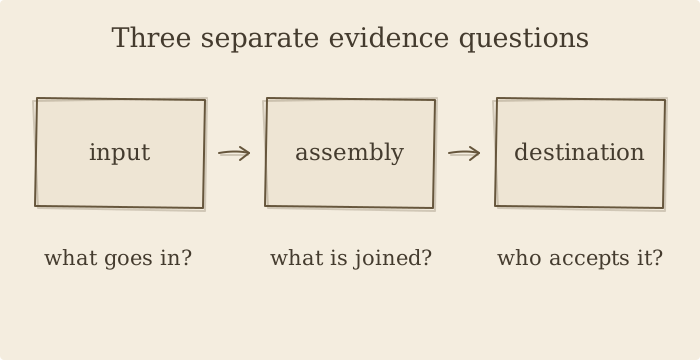
Ask which claim is being made
The catalog includes Rothy’s under a knit-from-recycled-input story, Thousand Fell under a take-back story, and LOLIWARE under a seaweed-based material story. These summaries describe different parts of a product system. None should be treated as a complete environmental assessment. A new input, a collection program, and a disposal instruction are not synonyms.
Separate the three layers
Start with what goes in, then how the object is constructed, then where it can go after use. A material may be joined to other materials, coated, colored, or assembled into a form that changes handling. A take-back route may depend on location and program terms. Read the current brand instructions rather than extrapolating from a material name.
Make the destination concrete
For a disposal or return claim, look for a named route and its conditions. Which regions are covered? Who accepts the item? Is preparation required? What happens if the route is unavailable? These questions avoid the common jump from “a process exists” to “this particular owner can use it.” No local recycling or composting instruction is supplied here.
Write a claim ledger
Give every statement a column for evidence and a column for unknowns. “Contains a particular input” may have a different source from “accepted by this program.” Keep those records separate. Without lifecycle data, do not compress them into a single “better” score. A candid product story can still be compelling when it makes its boundaries visible; it gives the reader something precise to check.
Objects referenced
- Rothy's · The Point3D-knit washable shoe from bottles. Brand reference · Catalog record
- Thousand Fell · Recyclable SneakerTake-back recyclable sneaker. Brand reference · Catalog record
- LOLIWARE · Edible Straws & CupsSeaweed-based edible tableware. Brand reference · Catalog record
Method: AI-assisted desk analysis of the dated Creative DTC catalog, not hands-on testing. Product formats are attributed to the linked records and brand references; interpretations and sketch prompts are editorial. Brand pages may change. Price, availability, performance, compatibility, and impact are not verified here.
Explore the materials collection