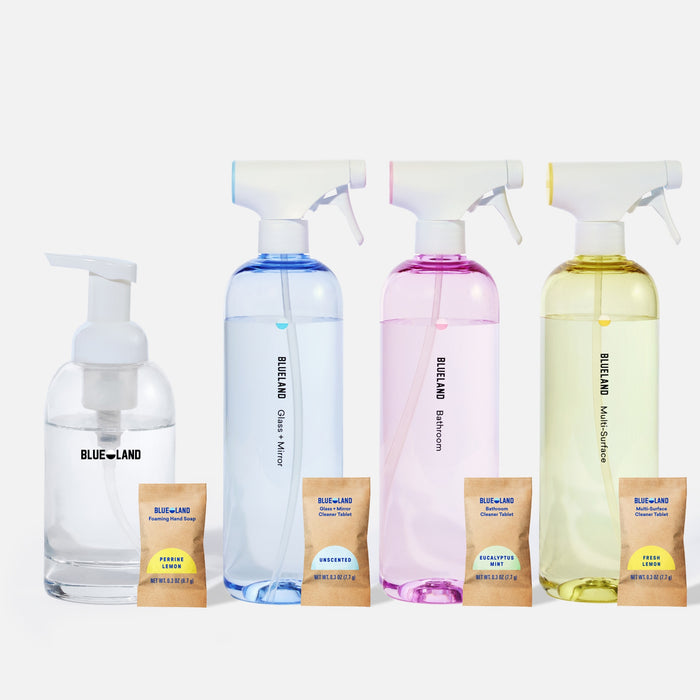
Blueland’s clearest creative asset is an action sequence. The kit page shows how water, a tablet and a retained bottle become a cleaner; refills are a distinct shopping destination. That makes the proposed behavior easy to represent in a short demonstration. Advocacy extends the same subject beyond the purchase, but it is weaker evidence of customer participation. Sustainability assertions need their own evidence and earn no automatic creativity points.
Navigation is observed; checkout, retention and subscriber behavior are not tested.
Source: blueland.com. Reviewed 2026-10-13. Publication date not established; observation date is not a launch date.
editorial · Observed 2026-10-13
Advocacy beyond the product page
The advocacy page presents the One Home Impact Fund and names organizations the brand says it supports.
Our reading. The same subject that motivates the product becomes an editorial destination. This adds continuity, though the page gives customers a mostly observational role.
Partner descriptions and funding statements are brand claims, not independently audited impact.
Source: blueland.com. Reviewed 2026-10-13. Publication date not established; observation date is not a launch date.
What to learn from it
Find the smallest visible action that explains your system. Build the starter kit, refill navigation and tutorial around that same action.
The trade-off
The system asks customers to prepare a product and remember refills. This review does not test whether the extra steps reduce adoption or verify environmental claims.
The catalog’s concentrate-and-bottle model is a useful category comparator. A full campaign comparison remains open; refilling alone is not exclusive to Blueland.
Why this score
Each dimension uses a 0–4 anchor. The total is weighted and rounded once. Read the method →
Product or experience originality 3/4 · 25% weight
Dissolving tablets in retained bottles makes the alternative routine concrete.